

How to prioritize your essential expenses

8 creative ways to save money on groceries


6-min. read
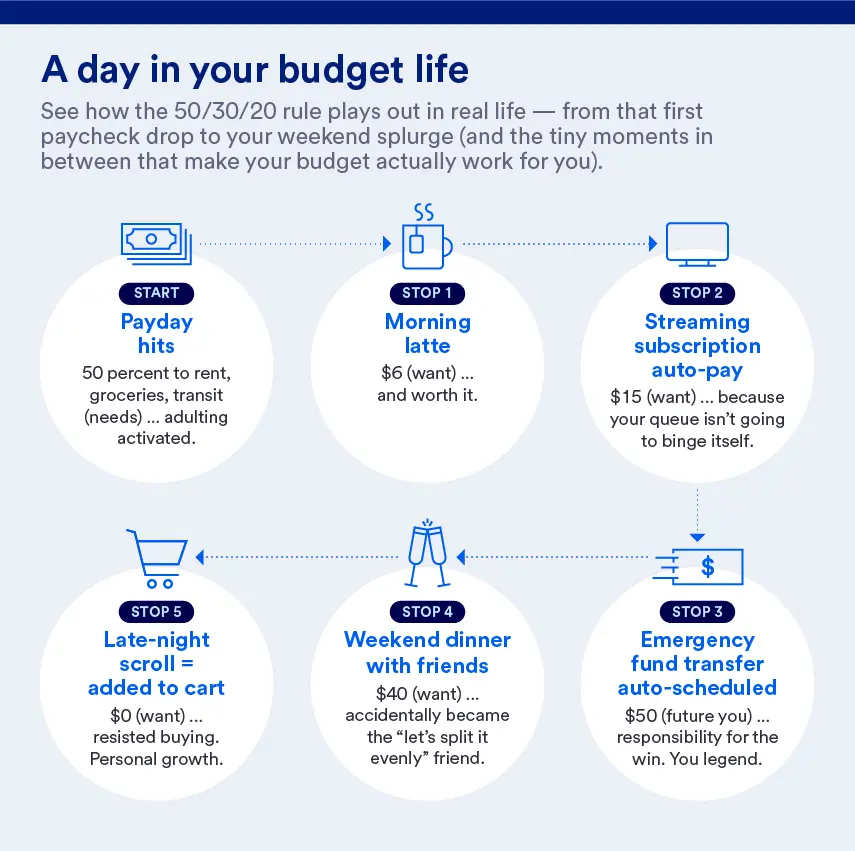
With the 50/30/20 rule, you divide your after-tax income into 50 percent for needs, 30 percent for wants and 20 percent for savings and debt repayment.
It’s a flexible, easy-to-follow framework that helps you maintain balance between enjoying life and planning for the future.
You can adapt the percentages as your goals or income change — the key is staying consistent and intentional.
Managing your money can feel overwhelming. Paying rent, buying groceries, tackling debt, saving for travel, building an emergency fund, enjoying small splurges … well, you get the picture.
But want to know a secret? There’s a simple formula that can help you take back control. It’s called the 50/30/20 budgeting rule.
Yes, budgeting. Before your eyes glaze over, here’s what’s great about this method: Rather than restricting your spending, it emphasizes financial balance — giving space for your needs and your wants.
For those new to budgeting, the 50/30/20 rule is a great starting place thanks to its simplicity. It doesn’t require meticulously tracking every latte or knowing the difference between APR and APY. That makes it easy to adopt — and stick to over time.
Here’s what you need to know.
The 50/30/20 rule is a budget framework that allocates 50 percent of your after-tax income to needs, 30 percent to wants and 20 percent to savings and debt payment. Following this rule ensures you’re taking care of business while also giving yourself permission to enjoy life.
To get started, follow these steps:
Track spending, automate savings and visualize your goals — all in the U.S. Bank Mobile App.
So, what actually goes into the “needs” category? This bucket covers your essential expenses — the ones that keep your life functioning smoothly, such as:
Think of these as nonnegotiables. If you can’t live without it — or would face serious consequences for skipping it — it likely belongs here.
Over time, your needs may shift. For example, childcare costs could drop when your child starts school, or your housing payment might rise if you move or buy a home.
Here’s where things get, well, fun! This category includes all your wants — the experiences and extras that make life enjoyable. That could mean:
Sometimes the line between needs and wants can blur. You need clothes, but not necessarily expensive designer duds. If your “fun” spending creeps past 30 percent, try trimming a few areas (maybe cut one streaming service or swap a weekly dinner out for a cozy night in).
And if your income drops or an emergency hits, this is the easiest area to scale back — but don’t stress. The beauty of the 50/30/20 rule is that it’s built to ebb and flow with your life. When things stabilize, you can ramp your fun spending right back up.
The final category is all about “future you” — the goals that move your finances forward. These might include:
One reason the 50/30/20 rule works long-term is its built-in flexibility. The percentages are guidelines, not laws.
If you’re just starting out and rent eats up more than 50 percent, that’s okay — just reduce your “wants” temporarily. If you’ve paid off debt, you can reallocate extra money to savings or even a little more fun. And if you get a raise or have side-gig income, you can bump up your savings rate or finally budget for that trip you’ve been fantasizing about.
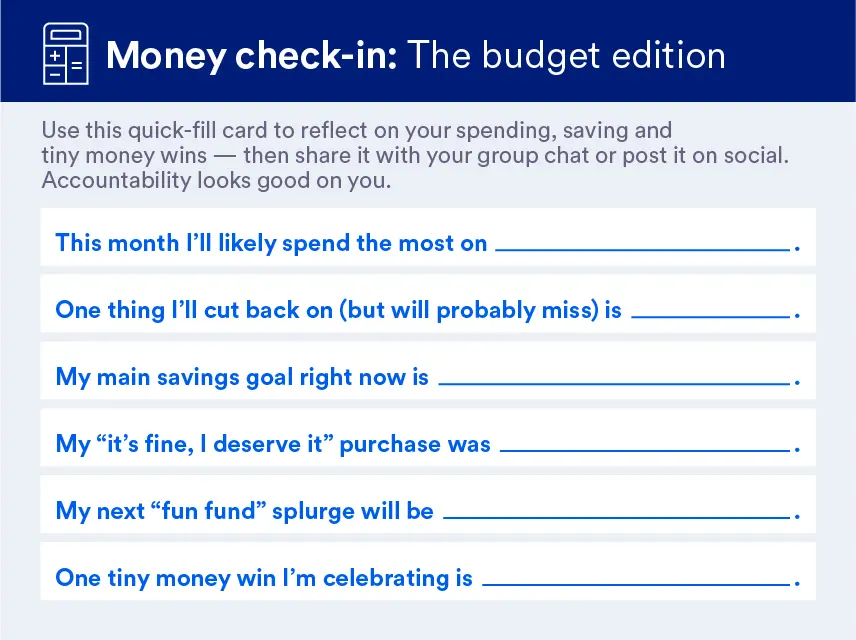
Your income, goals and expenses will change over time. What matters most is staying intentional and finding a balance that supports both your present and your future self.
Totally normal! The rule is a framework, not a mandate. You can adjust to 60/20/20 or 70/20/10 depending on your situation. The key is maintaining balance between needs, wants and savings.
Nope. The 50/30/20 rule uses after-tax income, meaning what actually lands in your account.
Aim for once a month to check progress and make small tweaks. Your spending habits and goals can shift, so think of your budget as a living, breathing plan.
Start smaller. Even setting aside 5 percent to 10 percent can build momentum. You can increase your savings rate gradually as your income grows or debts shrink.
 Equal Housing Lender